Rentosertib
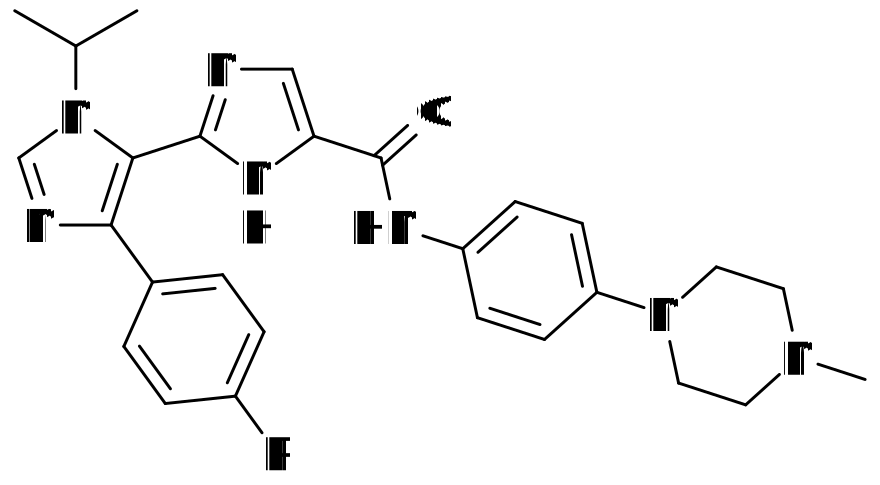
Rentosertib is an experimental tablet for idiopathic pulmonary fibrosis (IPF) whose target and molecule were both identified using artificial intelligence. It is in Phase III trials in China. This site covers what has been published about it, what the trials found, including the safety findings, and where it stands for people with IPF in the UK.
Where things stand
Licensed
Nowhere
No regulator has approved it. US orphan drug and China breakthrough therapy designations only.
Available in the UK
No
No UK trial, no MHRA application, no early-access scheme. Details
Stage
Phase III
320 people, 47 centres, all in China. First patient dosed 10 September 2026. Details
Results expected
2029
Phase III completion is estimated for October 2029; the lead investigator estimates three to four years to any approval.
Start here
What is rentosertib?
The medicine, its names, who makes it and where it is in development.
ReadWhat the Phase 2a trial found
71 people, 12 weeks, four dose groups. Lung-function results, the liver-toxicity signal and the withdrawal rate.
ReadSafety and side effects so far
Adverse events in healthy volunteers and in people with IPF, and what remains unknown.
ReadWhat it means for the UK
Availability, how new medicines reach the NHS, and the treatments UK patients can have now.
ReadThe "biological age" claims
The September 2026 proteomic ageing-clock analysis and its limitations.
ReadHow AI was used
Target identification, molecule design, what is genuinely new, and the criticisms.
Read
Latest news
Trade report says the Phase 3 readout is unlikely before late 2027
Clinical Trial Vanguard reported that the primary readout from the Phase 3 trial is unlikely before late 2027. It also reported that Insilico is funding the trial itself from revenue generated by its partnership deals. The trial registry estimates completion in October 2029.
First patient dosed in the Phase 3 trial of rentosertib
Insilico announced that the first patient had been dosed in GENESIS-IPF-3 at Peking Union Medical College Hospital, with Shanghai Pulmonary Hospital dosing on the same day. The trial plans to enrol 320 people at 47 centres in China and to run for 52 weeks, with completion estimated for October 2029. The principal investigator, Xu, said approval might take ‘three to four years under favourable conditions’.
IBTimes UK reports a reduction in predicted biological age
IBTimes UK was the only UK consumer outlet to cover the ageing analysis. Its headline says the drug appears to reverse biological age by up to six years, which goes beyond the peak of about three to four years at week 4 reported in the paper. The article does note that only 21 of 54 comparisons reached a Q value below 0.10 and that LTBP2, a fibrosis protein, was the largest contributor.
USA Today reports on the ageing claim
USA Today covered the ageing-clock analysis under the headline ‘AI drug rentosertib may slow aging. What testing found.’ Alex Zhavoronkov told the paper: ‘There’s no drug that we know of … that can extend life of already optimized individuals.’ No trial has measured whether rentosertib affects lifespan.